Material Core

FR4 PCB Base Solutions

Utilizing premium-grade glass-reinforced epoxy substrates to build rugged structural durability and permanent electrical insulation.

```
Industry Standard Substrates

The Glass-Epoxy Foundation of Modern Electronic Architecture

Every reliable hardware system requires an unyielding, structurally stable foundation. FR4 (Flame Retardant 4) is the global industry standard designation for woven fiberglass-reinforced epoxy resin laminates. It stands as the absolute structural workhorse of the electronics manufacturing world, translating theoretical schematics into rugged physical hardware.

The success of FR4 stems from its optimal balance of mechanical strength, high dielectric insulation, and cost efficiency. From simple double-sided control boards to dense, high-frequency multi-layer arrays, FR4 provides the structural integrity required to support fine-pitch copper traces under severe operational stresses.
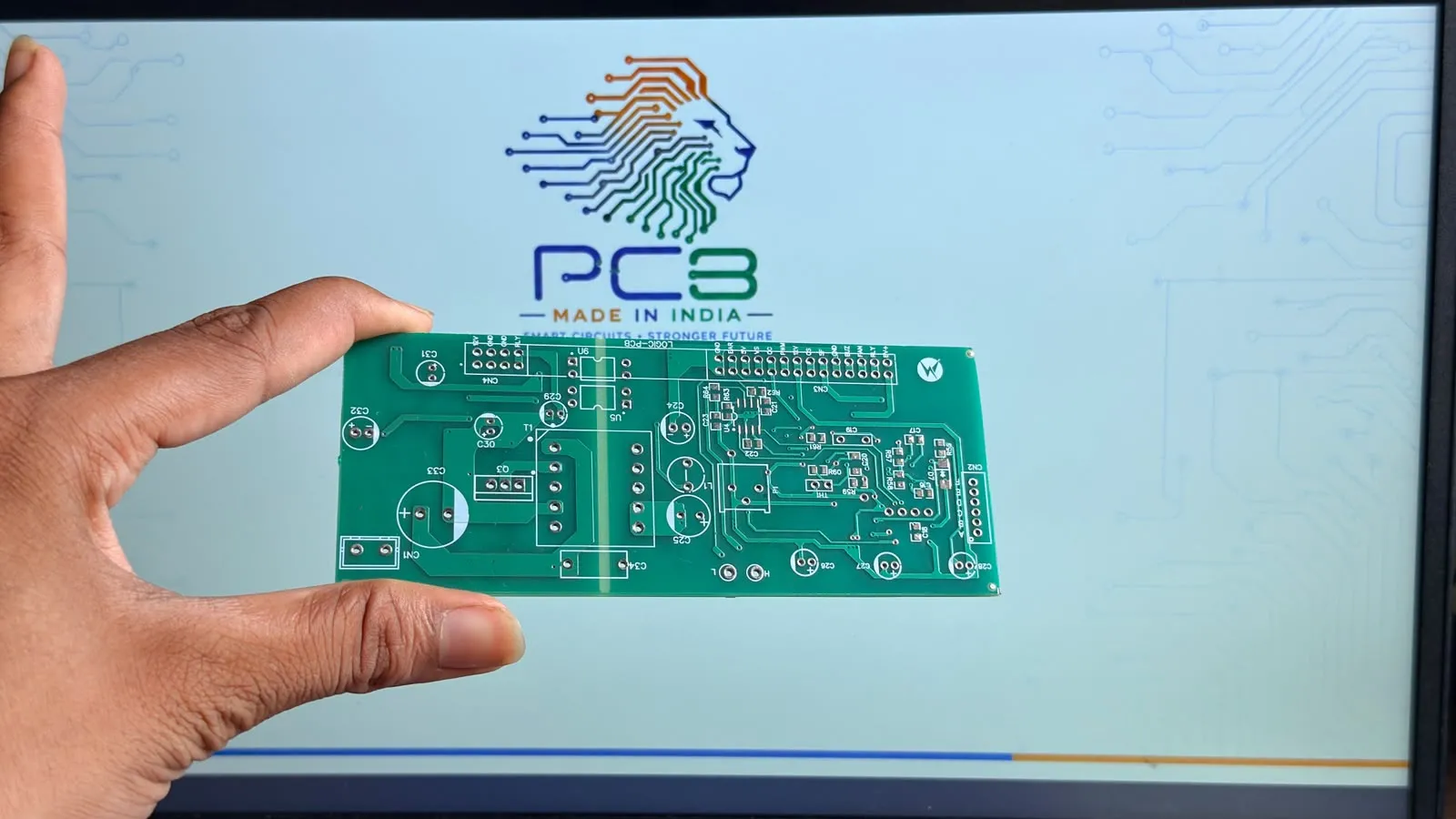
High Quality FR4 Raw Material Panel Production

Substrate Quality Audit

Standard glass-epoxy panels preparing for copper-cladding matrix integration.

The Material Physics of High-Performance Laminates

Evaluating glass transition parameters, dielectric stability, and mechanical coefficients.

When operating inside industrial or high-power thermal environments, the performance of an FR4 board depends heavily on its Glass Transition Temperature (Tg). The Tg rating represents the critical temperature threshold where the structural base material transitions from a rigid, glassy state to a dynamic, softened state. Standard FR4 operates reliably around **130°C - 140°C**, but demanding, high-density multi-layer layouts require High-Tg material variants (**170°C - 180°C**) to prevent inner-layer shifting and trace separation during automated reflow soldering.

Concurrently, maintaining control over the Dielectric Constant (Dk, typically ranging between **4.2 - 4.7** for standard glass-epoxy configurations) remains essential. Fluctuation inside the resin-to-glass weaving ratio directly impacts signal transmission velocities and alters matched differential impedance lines. Our manufacturing setups strictly control material batch constants, maintaining stable, predictable signal pathways across every panel configuration.

"Material uniformity is the anchor of high-speed electronic manufacturing. Variations inside the dielectric constant across a single sheet can introduce unexpected signal reflections, disrupting high-frequency trace diagnostics."

— Composite Substrate Chemistry Lab Review

Core Mechanical and Thermal Benchmarks Managed:

  • High Thermal Endurance: High-Tg material options that easily withstand intensive lead-free reflow heating loops without warping.
  • UL94 V-0 Flammability Class: Self-extinguishing material behaviors designed to meet strict regulatory safety rules for commercial and industrial designs.

Reliable Domestic Material Pipelines

Relying on international suppliers for high-volume standard rigid boards leaves product groups exposed to sudden customs changes and expensive overseas freight rates.

At pcbmadeinindia.com, we maintain extensive stock layers of premium, pre-verified glass-epoxy panels right at our production center in Gujarat. Our local team conducts deep **Design for Manufacturability (DFM)** routing checks immediately, adjusting panel parameters to optimize production yields without timezone delays.

Direct Factory Dispatch Transparent Local Logistics
National Sourcing Integrity

Securing High-Yield, Dependable Circuit Foundations Locally

By coordinating all material sourcing and custom mechanical processing sequences within a transparent domestic framework, we give Indian engineering teams absolute confidence in their supply chains.

Our FR4 processing arrays are configured to support the entire product lifecycle—from quick-turn low-volume engineering prototypes to scalable commercial production runs. By ensuring identical composite qualities across both prototyping and production, we guarantee that your circuits exhibit the exact same electrical behaviors when migrating to mass rollouts.

FR4 Material Capability Bounds

Granular parameter limits and composite metrics for our standard rigid board lines.

Substrate Parameter Standard Value Range Advanced Factory Limits
Glass Transition (Tg) Profile Standard Tg 135°C - 140°C High Tg 170°C - 180°C (Kingboard / Shengyi)
Dielectric Constant (Dk @ 1GHz) 4.2 to 4.7 Controlled Layer Uniformity ± 0.1
Lamination Thickness Scale 1.6mm (Standard thickness) Ultra-thin 0.4mm up to heavy 3.2mm panels
Base Copper Weights 1 oz (35 µm) Heavy Copper 2 oz / 3 oz / 4 oz Cladding
Flammability Classification UL 94V-0 Compliant Base Full IPC-4101 Quality Certified Traceability
Max Fabrication Layer Matrix Up to 4 Layers Stable Up to 12 Layers High Density Stackups

Note: Standard rigid processing lists take regular green/white solder mask defaults. Specialized matte variations or heavy copper pad structures require explicit manufacturing reservation.

Establish Your Hardware on Proven Foundations

Bypass international logistics friction. Share your standard or high-Tg rigid board Gerber files directly with our local engineering core for an exhaustive fabrication quote today.